
High-Performance Liquid Chromatography (HPLC) is considered superior to Gas Chromatography (GC) for cannabinoid potency testing for several key reasons:
- Accurate Measurement of Acidic and Neutral Cannabinoids: HPLC can accurately differentiate and measure both the acidic (such as THC-A, CBD-A) and neutral forms (THC, CBD) of cannabinoids. This is due to its operation at room temperature, which prevents the decarboxylation process that occurs in GC. GC, by heating the sample, often converts acidic cannabinoids to their neutral forms, leading to inaccurate readings of their original levels.
- No Decarboxylation Issue: Since HPLC does not involve high temperatures, it avoids the decarboxylation of cannabinoids. This is crucial for accurate potency testing, as GC's heating process can change the chemical composition of the cannabinoids, affecting the results.
- Comprehensive Cannabinoid Profile: HPLC provides a more comprehensive analysis of the cannabinoid profile of a sample. It's capable of detecting a wider range of cannabinoids, which is essential for understanding the full therapeutic potential of a cannabis product, especially in medical and research contexts.
- Precision and Sensitivity: HPLC is known for its precision and sensitivity. It uses ultraviolet light detection, allowing it to accurately identify and quantify different cannabinoids based on how they interact with UV light.
- Suitability for Medical and Research Purposes: Given its ability to provide a detailed and accurate cannabinoid profile, HPLC is more suitable for medical and research applications where understanding the exact composition of a cannabis product is crucial.
In summary, HPLC's ability to accurately measure both acidic and neutral cannabinoids, its avoidance of decarboxylation, and its precision make it a more reliable and comprehensive method for cannabinoid potency testing compared to GC.
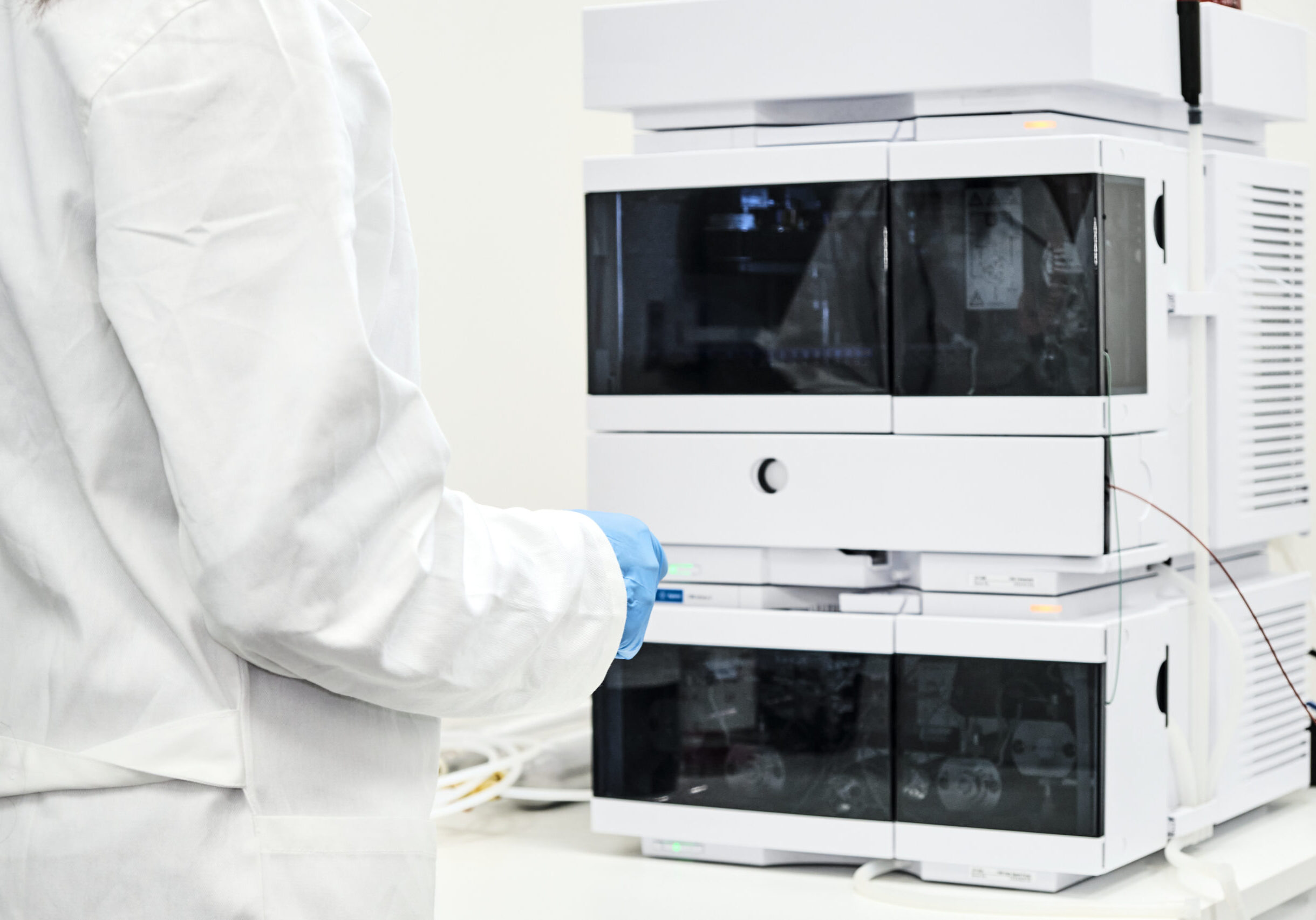
High-Performance Liquid Chromatography, or HPLC, represents a more advanced and precise technique for cannabinoid potency testing. In this method, similar to GC, the cannabis sample is initially ground into a fine powder. This ensures uniformity in the sample, crucial for accurate testing.
The extraction process in HPLC involves the use of a solvent, just like in GC, followed by sonification and centrifuging. This step is critical as it ensures that the cannabinoids are thoroughly extracted from the plant material, resulting in a more accurate representation of the sample's cannabinoid profile.
Once the extraction is complete, the HPLC method diverges significantly from GC. In HPLC, the extracted cannabinoids are passed through a special column in a liquid phase, rather than being vaporized. This critical difference means that HPLC does not involve the application of high temperatures, which is a significant advantage. By avoiding heat, HPLC can accurately detect and measure both the acidic (THC-A, CBD-A) and the neutral (THC, CBD) forms of cannabinoids. This is because the acidic forms are not subjected to decarboxylation (conversion to neutral forms) due to the absence of heat.
Another key aspect of HPLC is the use of ultraviolet light detection. As the cannabinoids pass through the column, they are exposed to UV light. Different cannabinoids absorb and reflect this light differently, allowing for precise identification and quantification. This sensitivity to different wavelengths of light is what enables HPLC to distinguish between various cannabinoids with a high degree of accuracy.
HPLC is particularly valued for its ability to provide a comprehensive cannabinoid profile of the sample. This includes not only the well-known compounds like THC and CBD but also lesser-known cannabinoids, which can be crucial for understanding the full therapeutic potential of a cannabis sample. The precision of HPLC makes it a preferred choice for medical and research applications where understanding the complete cannabinoid makeup is essential.
In summary, HPLC stands out for its ability to accurately measure both acidic and neutral cannabinoids without altering their chemical structure. This method is vital for producing a complete and accurate cannabinoid profile, making it indispensable in the cannabis testing industry, especially for medicinal and research purposes.